COMPASSION INTERNATIONAL
2022
Compassion’s Gamification
Redesigning the mobile app and creating additional web experiences to cultivate closer relationships between sponsors and their sponsored children using gamification elements — across all websites & mobile apps.

CLIENT
Xemelgo Software
YEAR
Jan 2025
TIMELINE
3 Months
PROJECT OVERVIEW
Conducted user research to help determine future UX strategy and direction for game-like elements that motivate people to be or stay loyal to Compassion International — across all websites and mobile apps.
My Scope:
User Research, UX Design, Ideation, User Interviews
Tools:
Figma, Userlytics, Quantum Metric, Google Analytics, Microsoft Excel
Duration:
8 Week Sprint — March 2022 to May 2022
Client:
Compassion International
My Role:
UX Design Intern II
The Team:
Connie Wong — UX Design Intern II
Lary Stucker — Director of Digital Experiences
Erik Carlson — Senior Manager of DX
Jeff Thompson — Senior UX Architect
Colin Sandlin — User Experience Specialist III
Kristen Reyes — User Experience Specialist II
The Problem — We want to increase…
Acquisition
Pre-sponsorship
Acquire potential new sponsors by showing Compassion’s impact
Engagement
Post-sponsorship
Increase letter writing between a sponsor and their sponsored child — the valley of Compassion’s success
Retention
Post-sponsorship
Longer sponsorship, more engagement, increased giving and letter writing
The goal
Conduct research and testing with prospective and current sponsors to understand what impact gamification could have in their journey to becoming a sponsor/donor and becoming a more engaged sponsor/donor. Develop a business case utilizing customer insights to inform next steps.
The OKRs
Conduct primary research with target audiences (combination of qualitative & quantitative studies) and design concept testing to gather customer insights.
The outcome
To address these problems, I designed screens within the .com experience, mobile app, and desktop app to help sponsors learn more about their sponsored children through learning dashboards, interactive maps within the onboarding process, an end-of-year review to show impact, and a letter-writing tracker.
Design approach

Stakeholder Interviews
We first interviewed the Director of Digital Experiences and Behavioral Scientists to understand human behavior and how gamification correlates to Compassion’s current features — picking their brain on what gamification design means to them.

Users need…
Safety
Not manipulated from social pressure to sponsor a child
Not creeped out by sharing personal info with their child or vice versa
First 6 Months are Vital
Past research shows the first 6 payments don’t start well
At events, people sponsor from social pressure — then later justify why they shouldn’t
Rewards Benefit the Child
Any rewards should also benefit the child — the whole reason for Compassion is to help children, not reward themselves.
Secondary Research
We completed secondary research by watching Yu-Kai Chou’s TEDx talk on gamification and reading existing articles on gamification design elements to understand how we may apply them — and to identify important questions and best practices.
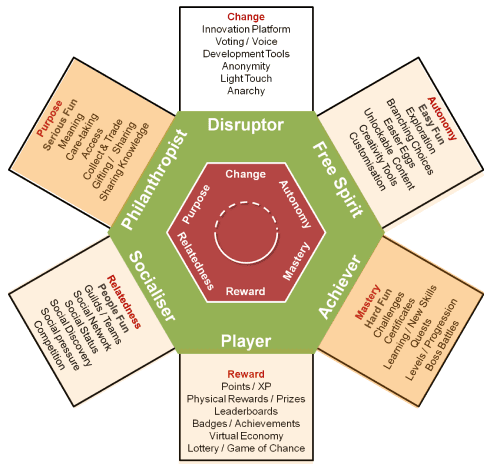
We chose the HEXAD framework because it describes six user types (versus Yu-Kai Chou’s 8), making it more practical for our research. Key findings:
Intrinsic motivation — doing something because it is personally rewarding to you
Extrinsic motivation — doing something because you want to earn a reward or avoid punishment
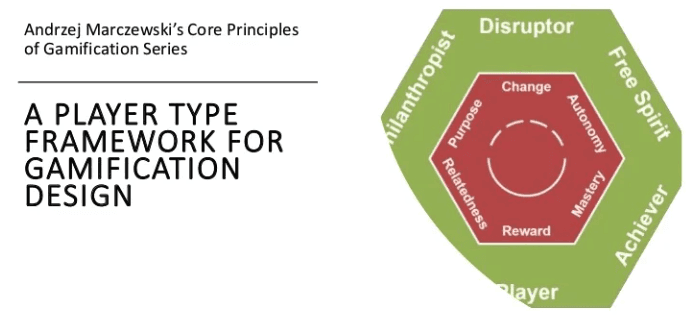


Survey to current users
To get a general idea about the gamer-type of our current sponsors, we sent out a survey and received 94 responses from current customers. Participants were aged 25 to 54. This helped us narrow down questions — for example, people are interested in game-like elements about serious fun or self-autonomy.

Overall improvements users wanted:
Saving photos and letters for later — features to go back to
More customization when letter writing
Show more impact through confirmation and pictures
Onboarding/exit can be more fun
12 User Interviews
We conducted 12 moderated interviews through Userlytics (5 with potential sponsors, 7 with current sponsors). Questions were formed using the HEXAD framework for Gamification Design to understand the main gamer types of potential and current customers. We also conducted competitive research on game-like elements of other nonprofit websites.

Potential users — typically these gamer types
✓ Motivators
Stats — progress bars, data visuals, hide/reveal interactions to make numbers discoverable
Map — build upon “where we work” map to be more interactive and show growth of impact
✗ Non-Motivators
Social Proof — users didn’t care to see this unless it was specifically someone they knew
Animation — not enough favor to take action
Fundraising Leaderboard — felt it was lacking details needed to take action
Current users — typically these gamer types

✓ Motivators
Letter Tracker — progress bar both ways, notifications, celebratory elements, approximate days
Unlock Templates — gamified way to reveal template is unlocked
Stats — progress bars, data visuals, anniversary milestones
Trivia/quiz learning — daily fact cards, progress bars, daily reads, learning videos
Celebratory Elements
✗ Non-Motivators
Badges for Achievement — current sponsors were very humble and didn’t care about others seeing their progress; they wanted to progress for their eyes only.
Team Ideation Workshop
Based on user personas and user research, we hosted a team workshop to explore design ideas. Activities included a brain-writing exercise where each person writes ideas, then adds on to the person next to them. As a team, we took our favorite ideas and completed Crazy 8’s — sketching ideas to life to turn them into mid-high fidelity prototypes for user testing.

LoFi Prototypes — Concept Testing
7 moderated interviews with current sponsors for concept testing across 5 Lo-Fi Prototypes — observations, key insights & next steps.

Observations — Learning Dashboard


#1 Favorite feature — if they can learn about their child
Remove leaderboard
Test fun facts vs. a quiz/course
A place to see/hear how child’s name is pronounced
Email updates from child’s center takes sponsors here to learn more

Observations — End-of-Year Review
Least favorite / least likely to use
One page report/summary vs. video or slideshow
A place for this to live so users can refer back to it
